Won’t He Make You Clean Inside?
SCRIPTURE: “How much more, then, will the blood of Christ, who through the eternal Spirit offered himself unblemished to God, cleanse our consciences from acts that lead to death, so that we may serve the living God!” Hebrews 9:14
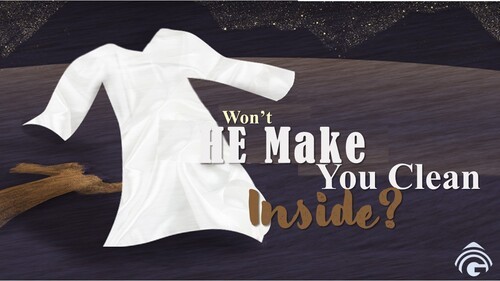
In the Muslim culture, prior to making prayer (Salat) or touching the Quran (their holy book) Muslims must make mandatory ablution (Tahara), which is the formal, often religious, act of washing oneself. Salat is five ritualized prayers performed at certain times throughout the day and night.
This is part of the obligation for every adult Muslin so that a connection with Allah is made. Muslim men, women, and children must do this ritual before making Salat. There are two types of ritual ablution, Wuda and Ghusl and they encompass both physical and spiritual cleaning. Wudu is partial ablution it involves daily washing of hands, mouth, nose, face, arms, head, ears, and feet. Ghusl is full ablution this is a full-body bath required after major impurities like sexual intercourse or menstruation.
Prior to Salat the following mandatory Ablution rituals must be observed. Water actually touching the skin so that anything on the skin can be washed off completely. This procedure includes:
1. mentally preparing to purify for the sake of Allah,
2. saying in “In the name of Allah” before starting,
3. washing both hands up to the wrist 3 times,
4. rinsing the mouth and nose 3 times,
5. washing the entire face from the hairline to the chin and from ear to ear 3 times
6. washing both arms up to the elbows three times starting with the right arm
7. wiping the head with wet hands once from front to back and back to front.
8. Cleaning the inside and outside of both ears with damp fingers once
9. Washing both feet up to and including the ankles making sure that water goes between the toes
In the Christian faith, a believer can talk to God whenever he/she wants. The work done at the cross by Jesus Christ was done for all of humanity. However, when you accept Christ as your personal Savior you are made clean. The blood of Christ, confession of sin, and the work of the Holy Spirit is how believers are made clean.
The personal relationship with Christ allows for direct communication with God. And although you should be in a proper mindset when praying, prayer can be made at any time and any place. 1 John 1:9 says, "If we confess our sins, He is faithful and just and will forgive us our sins and purify us from all unrighteousness." 1 John 1:7 states "But if we walk in the light, as He is in the light, we have fellowship with one another, and the blood of Jesus, His Son, purifies us from sin."
While we do not practice the ritual of self-purification, we should be pure of mind when we pray, the ability to come to the Lord in prayer in the mist of sin is a wonderful thing. In the mist of sin there may be conviction that causes immediate pause and communication with the Lord. Physical cleaning of the body does not cleanse the heart, because the heart is deceitful and desperately wicked (Jeremiah 17:9).
It is during our darkest hours that the Lord says, "Come to Me, all you who labor and are heavy laden, and I will give you rest." (Matthew 11:28). Moreover, internal cleaning is done by the Lord and shows itself on the outside in the way we act, dress, and talk. The Lord says in Isaiah 1:18, “Come now, and let us reason together...Though your sins are like scarlet, they shall be as white as snow; though they are red like crimson, they shall be as wool.” You can approach the Lord dirty, smelly, covered in sin and He will accept you, forgive you, and make you clean.
PRAYER: Dear Heavenly Father, 'come as you are' is a form of grace that we often take for granted. Thank You for seeing pass my filth and seeing the best of me. Thank You for being obedient even to the cross so a sinner like me could be made whole. Thank You for cleaning up the inside so that my outside reveals Your love. In the name of Jesus, Amen.
By Sis. Patricia Towns
This is part of the obligation for every adult Muslin so that a connection with Allah is made. Muslim men, women, and children must do this ritual before making Salat. There are two types of ritual ablution, Wuda and Ghusl and they encompass both physical and spiritual cleaning. Wudu is partial ablution it involves daily washing of hands, mouth, nose, face, arms, head, ears, and feet. Ghusl is full ablution this is a full-body bath required after major impurities like sexual intercourse or menstruation.
Prior to Salat the following mandatory Ablution rituals must be observed. Water actually touching the skin so that anything on the skin can be washed off completely. This procedure includes:
1. mentally preparing to purify for the sake of Allah,
2. saying in “In the name of Allah” before starting,
3. washing both hands up to the wrist 3 times,
4. rinsing the mouth and nose 3 times,
5. washing the entire face from the hairline to the chin and from ear to ear 3 times
6. washing both arms up to the elbows three times starting with the right arm
7. wiping the head with wet hands once from front to back and back to front.
8. Cleaning the inside and outside of both ears with damp fingers once
9. Washing both feet up to and including the ankles making sure that water goes between the toes
In the Christian faith, a believer can talk to God whenever he/she wants. The work done at the cross by Jesus Christ was done for all of humanity. However, when you accept Christ as your personal Savior you are made clean. The blood of Christ, confession of sin, and the work of the Holy Spirit is how believers are made clean.
The personal relationship with Christ allows for direct communication with God. And although you should be in a proper mindset when praying, prayer can be made at any time and any place. 1 John 1:9 says, "If we confess our sins, He is faithful and just and will forgive us our sins and purify us from all unrighteousness." 1 John 1:7 states "But if we walk in the light, as He is in the light, we have fellowship with one another, and the blood of Jesus, His Son, purifies us from sin."
While we do not practice the ritual of self-purification, we should be pure of mind when we pray, the ability to come to the Lord in prayer in the mist of sin is a wonderful thing. In the mist of sin there may be conviction that causes immediate pause and communication with the Lord. Physical cleaning of the body does not cleanse the heart, because the heart is deceitful and desperately wicked (Jeremiah 17:9).
It is during our darkest hours that the Lord says, "Come to Me, all you who labor and are heavy laden, and I will give you rest." (Matthew 11:28). Moreover, internal cleaning is done by the Lord and shows itself on the outside in the way we act, dress, and talk. The Lord says in Isaiah 1:18, “Come now, and let us reason together...Though your sins are like scarlet, they shall be as white as snow; though they are red like crimson, they shall be as wool.” You can approach the Lord dirty, smelly, covered in sin and He will accept you, forgive you, and make you clean.
PRAYER: Dear Heavenly Father, 'come as you are' is a form of grace that we often take for granted. Thank You for seeing pass my filth and seeing the best of me. Thank You for being obedient even to the cross so a sinner like me could be made whole. Thank You for cleaning up the inside so that my outside reveals Your love. In the name of Jesus, Amen.
By Sis. Patricia Towns
Archive
2026
January
"BE PREPARED" and "DO A GOOD TURN DAILY"The Devil Subtly Rocks Me to SleepUNBELIEVEABLESUNDAY MORNING PRAYERS WITH Pastor Wayne CockrellAsk for DirectionNew Year, Same GodGiving and ReceivingWhom Might the 'Me' Be?CAUGHT Off GODAre You Sure, Lord, This is For Me?SUNDAY MORNING PRAYERS with Pastor Wayne CockrellOh, the King IS ReturningOur Joy is God’s GloryCaught Off GOD – Part 2Thinking Like JesusThe Cage MatchWeight Loss Goals for 2026SUNDAY MORNING PRAYERS with Pastor Wayne CockrellPEACE: A CallingUse Me Lord, Even MeDon’t Miss JesusA Revival for SurvivalA BIRDS-EYE VIEW, AND BEYONDThe Choice Is YoursSUNDAY MORNING PRAYERS with Pastor Wayne CockrellThe God-Man GlorifiedEvil Is Not InvitedOpen and ReadGOD: 'BIG' ENOUGH FOR ALL, 'SMALL' ENOUGH FOR METhe Ungrateful HeartWe are the Lord’s
February
SUNDAY MORNING PRAYERS with Pastor Wayne CockrellTAKE THIS PERSONALLYSHARPEN THE EDGEExercising My FaithTake Me Back, LordTis So Sweet to Trust in JesusNo One is Greater than JesusSUNDAY MORNING PRAYERS with Pastor Wayne CockrellACHIEVERS For HIS GloryStewards of Our MarriageSharpen The Edge {Again}Set-Up for a MiracleOur AimA Valentine's Day Card to Our Heavenly GroomSUNDAY MORNING PRAYERS with Pastor Wayne CockrellSPIRITUAL ERsBehind the Closed DoorSHARPEN THE EDGE pt 3No Room for Discrimination in the BodyA Supernatural LoveBelieve GodSUNDAY MORNING PRAYERS with Pastor Wayne CockrellSTAY FOCUSED: Run YOUR RaceTake Over for Your Glory"FRUITFULNESS", Never Out Of SeasonLove Has Everything to Do With It STILL PRESSING ONA Bit of Wisdom from ‘Sayings’
March
SUNDAY MORNING PRAYERS with Pastor Wayne CockrellWHO HINDERED YOU?”God’s Awesome Sufficient GraceMary Served Despite the Cost (Blessed Woman #1)Eateth Thou This? Drinketh Thou This?Spiritual Effect of Biblical ProportionsOur ChargeSUNDAY MORNING PRAYERS with Pastor Wayne CockrellWhatever Happened to CONTENTMENT?God’s Overflow “Through” ObedienceA Samaritan Meets The Messiah (Blessed Woman #2)‘UNTIL’Superstitious or SpiritualTHE GOSPEL OF JOHN: AN ENDEARING LOOKSUNDAY MORNING PRAYERS with Pastor Wayne CockrellThe Believers’ High-Def LifeBroken for His GlorySarah’s Legacy in Faith (Blessed Woman #3)The CleanseJesus is REALSUNDAY MORNING PRAYERS with Pastor Wayne CockrellOur Best InterestKeep Standing No Matter WhatSister Cheryl Torain - A Modern-Day Virtuous Woman (Blessed Woman #4)In Praise of MundanenessGet Yourself TogetherOn AssignmentSUNDAY MORNING PRAYERS with Pastor Wayne CockrellJesus’ Manner of Deep LoveA Better Covenant, Jesus
April
Recent
God’s Promises Are Tied to His Purpose
September 12th, 2026
Reflections on 9/11- For God Made My Heart Weak
September 11th, 2026
Life Pain and Triumph
September 10th, 2026
The Glorious God-Man Christ Jesus
September 9th, 2026
Fear is Not of God
September 8th, 2026
THE COMING SEPARATION
September 7th, 2026
SUNDAY MORNING PRAYERS with Pastor Wayne Cockrell
September 6th, 2026
Anger Doesn’t Have to Win
September 5th, 2026
Like Knives, Dull Saints Need Sharpening
September 4th, 2026
Independence brings Consequences
September 3rd, 2026
3 Comments
Amen sister Pat! ?? I'm so glad that the Lord makes me clean inside and out! I don't need all of those richuals as the Muslims.
Hallelujah Thank You Jesus for Your powerful blood that cleanses!!!
Amen! Thanks Pat.